Is Budding Asexual Reproduction Exclusive Creator Content #759
Jump In is budding asexual reproduction deluxe digital media. Complimentary access on our digital playhouse. Get captivated by in a treasure trove of documentaries demonstrated in high definition, optimal for premium viewing junkies. With the newest drops, you’ll always stay updated. Discover is budding asexual reproduction hand-picked streaming in crystal-clear visuals for a genuinely gripping time. Enroll in our digital hub today to peruse special deluxe content with free of charge, no need to subscribe. Benefit from continuous additions and explore a world of bespoke user media intended for first-class media connoisseurs. Be sure to check out specialist clips—get it in seconds! Treat yourself to the best of is budding asexual reproduction exclusive user-generated videos with impeccable sharpness and select recommendations.
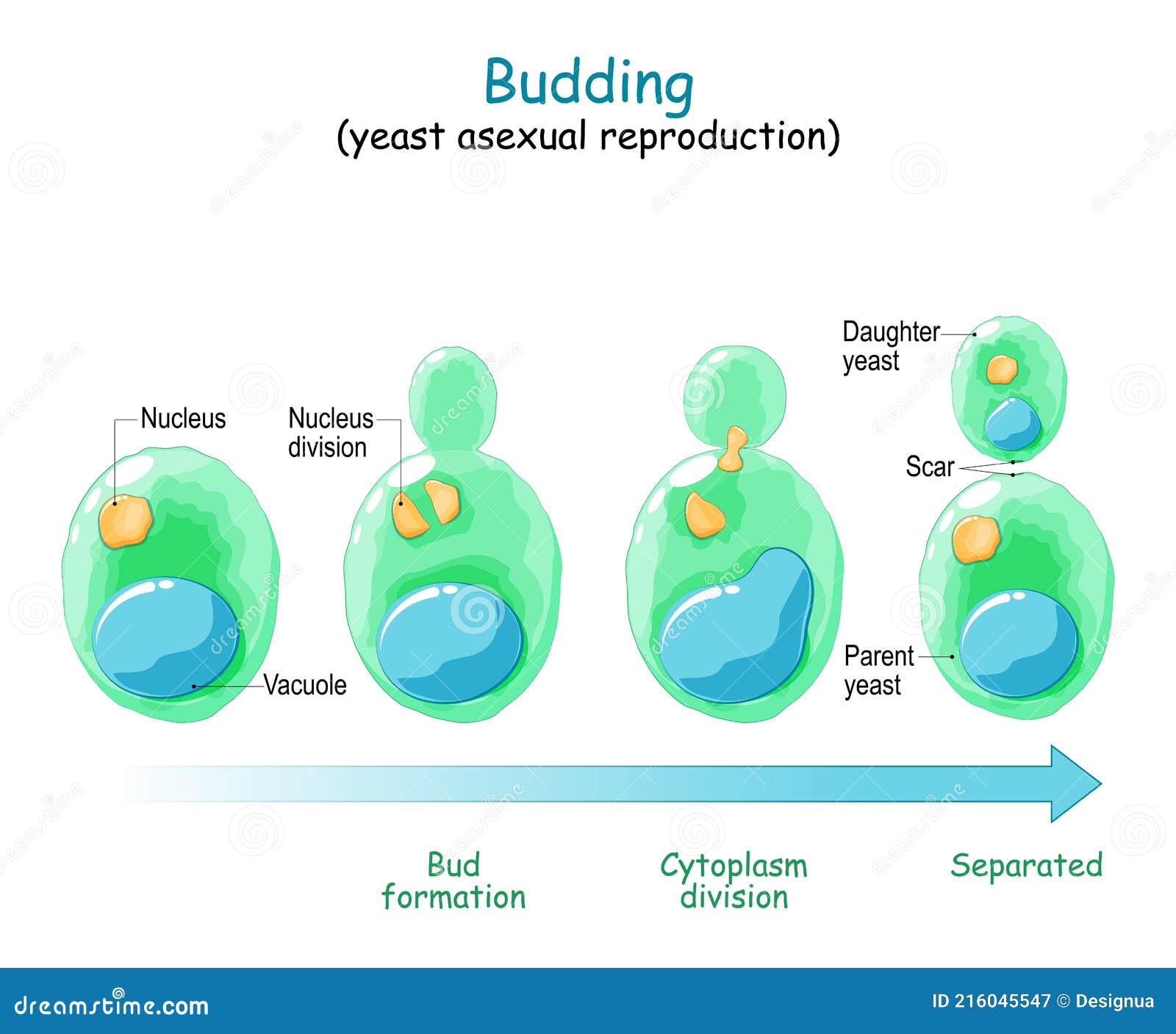
Budding, in biology, a form of asexual reproduction in which a new individual develops from some generative anatomical point of the parent organism Whether in yeast, hydra, or plants, budding allows organisms to quickly and effectively increase their population without the need for genetic recombination. In some species buds may be produced from almost any point of the body, but in many cases budding is restricted to specialized areas.
Budding Yeast Asexual Reproduction Science Design Illustration Diagram 44792866 Vector Art at
Budding or blastogenesis is a type of asexual reproduction in which a new organism develops from an outgrowth or bud due to cell division at one particular site. Budding is a fascinating and efficient mode of asexual reproduction that ensures the rapid propagation and survival of species Budding is a mode of asexual reproduction where a new organism develops as an outgrowth from the body of the parent organism
Learn how budding occurs in bacteria, fungi, protozoa, hydra, and plants, and compare it with binary fission.
Definition of budding budding is a type of asexual reproduction Budding is the formation of an individual daughter from a small bud on the parent's body The newly developed progeny produced by this method are genetically and morphologically homologous to the parent organism During budding, a cytoplasmic disruption takes place in the basal area of the parent body and results in the.
Budding is a form of asexual reproduction developing a new individual from the same generative anatomical point of the parent organism restricted to specialized areas However, in some cases, buds can be produced from any point of the body The budding process is observed in various organisms of different species, like fungi, algae, hydra, and some species of coral Asexual reproduction involves producing progeny that are genetic clones of the parent
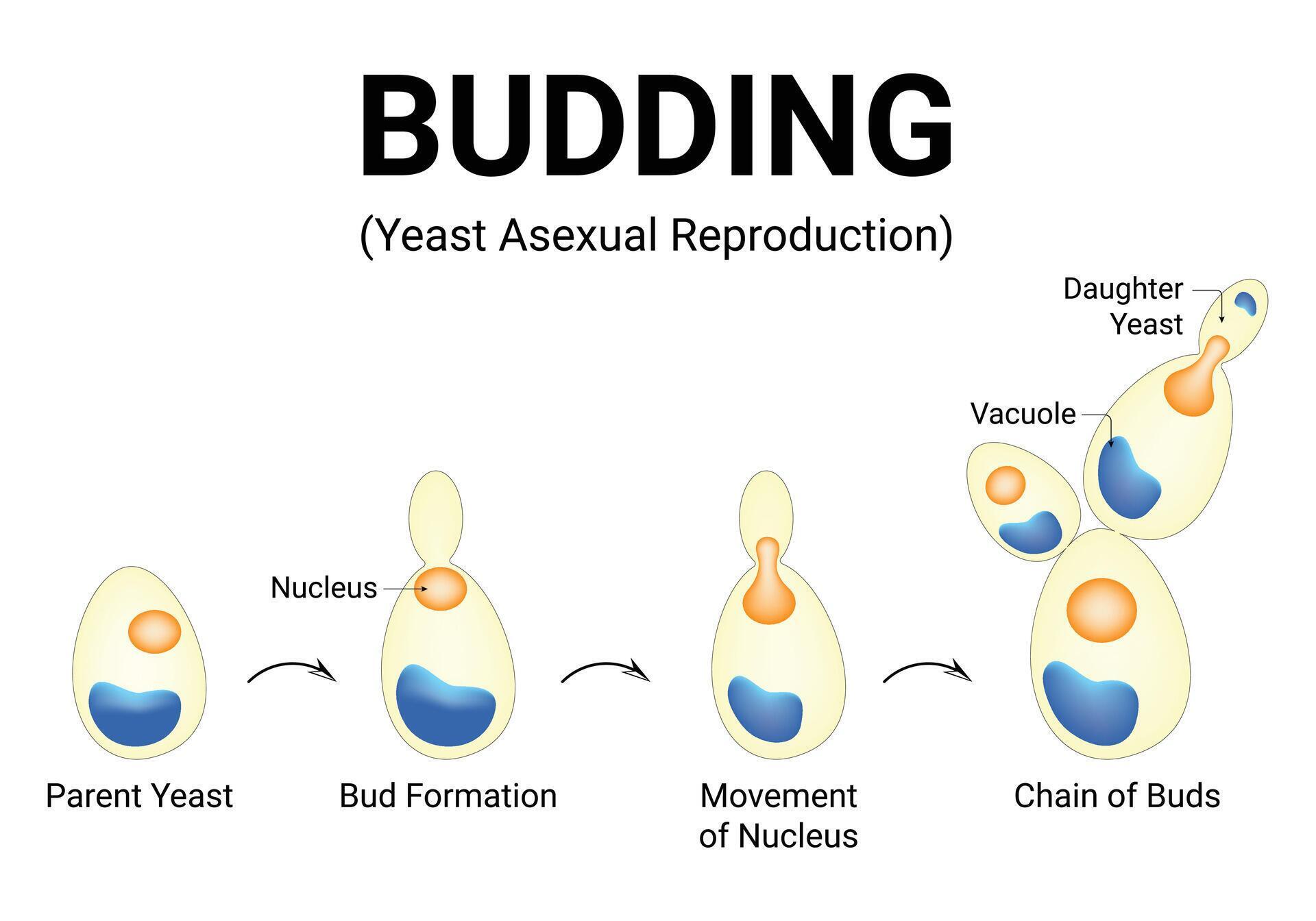
This can be done by regeneration, budding, and binary fission.